
🗺️ World Map Emoji

Emoji
🗺️ Emoji Information
- Name:
- World Map
- Shortcode:
- :world_map:
- Software Shortcodes:
-
:world_map: ( Github, Slack, Discord )
:map: ( Discord ) - Keywords:
- map, world
- Category:
- Travel & Places » Place Map
- Introduced:
- 2014 ( Unicode 7.0 )
- Unicode Codepoint(s):
-
🗺U+1F5FA
️U+FE0F
- Modifier:
- Not Available
🗺️ World Map Meaning
The world map emoji typically represents the Earth and can evoke a sense of global connectivity, travel, geography, and cultural diversity. When utilized in digital communication, it often symbolizes the concept of the world as a unified whole, highlighting the interconnectedness of different regions and peoples. This can be particularly useful in contexts where the conversation involves international relations, global news, or multinational discussions. For individuals who are passionate about travel, the world map emoji can encapsulate their love for exploration and adventure, symbolizing dreams of discovering new places and experiencing different cultures.
On social media platforms and in messaging applications, the world map emoji may be used to indicate travel plans, sharing of travel experiences, or aspirations to visit various destinations around the globe. It conveys a sense of wanderlust and curiosity about the broader world, transcending linguistic and cultural barriers to connect people through shared interests and experiences. Additionally, the emoji can serve as a shorthand for global events or initiatives, making it easy to quickly communicate complex ideas related to international matters.
Moreover, the world map emoji sometimes finds its place in academic and educational contexts. It can symbolize subjects like geography, history, and international studies, and may be employed by educators and students alike to discuss topics ranging from climate change to cultural studies. By providing a visual representation of the world, it aids in emphasizing the importance of a global perspective, fostering an understanding and appreciation of the myriad ways in which different regions and societies interrelate. In summary, the world map emoji is a potent digital symbol that conveys much more than just a geographical representation; it embodies the spirit of global unity, exploration, and education.
The world map emoji was introduced in 2014 and released as part of the Unicode 7.0 standard. This emoji can be found under the travel and places category. Because the world map emoji has been around for quite some time, it should display correctly in the majority of operating systems.
🗺️ Examples and Usage
Here are some practical examples of how this emoji can be used in various conversations, social media posts, or messages. These sentences provide context to highlight the emoji's meaning, emotions, and situations it commonly represents. Whether you're expressing your mood, making a statement, or simply adding some fun to your text, these examples can help inspire your own creative use of this emoji. Feel free to adapt or personalize them for your needs!
- Planning our next adventure 🌍🗺️ Can't wait to explore new places!
- Just booked a trip around the world 🌐🗺️✈️ Who's got travel tips?
- Studying geography for my big exam today 📝🗺️ #StudentLife
- Mapping out our road trip 🚗🗺️ Ready for a weekend of discovery!
🗺️ Emoji on Different Devices
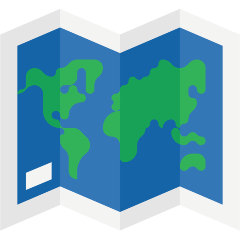
Here, you'll find a variety of emojis showcasing how they appear across different operating systems. Each company designs emojis to reflect their own unique style, meaning the appearance of the same emoji can vary depending on the platform. We've gathered the most popular platforms to give you a glimpse of how these emojis will look on their respective screens.
Keep in mind that depending on the version of the operating system, the emoji images may still look slightly different from what you see here. For your convenience, you can download any of the images by clicking on the symbol next to each one.










🗺️ Worldwide Trend
Stay updated with the latest global trends using data from Google Trends. This section provides insights into how frequently emojis are being searched on the web over the past 12 months. Explore the current trends to see which emojis are gaining popularity worldwide.
🗺️ Developer Codes
In this section, you'll find the essential codes developers use to integrate and display emojis across various platforms. Whether you're working with HTML, CSS, or other programming environments, these codes will help ensure that the emojis render consistently and correctly in your projects.
- Shortcode:
- :world_map:
- Software Shortcodes:
-
:world_map: ( Github, Slack, Discord )
:map: ( Discord ) - Hex Code:
-
🗺️ - Decimal Code:
-
🗺️ - Punycode:
-
xn--718h - URL Escape Code:
-
%F0%9F%97%BA%EF%B8%8F - JavaScript & JSON:
-
\ud83d\uddfa\ufe0f - CSS Code:
-
content: '\1F5FA \FE0F';