
🕋 Kaaba Emoji

Emoji
🕋 Emoji Information
- Name:
- Kaaba
- Shortcode:
- :kaaba:
- Software Shortcodes:
-
:kaaba: ( Github, Slack, Discord )
- Keywords:
- islam, kaaba, Muslim, religion
- Category:
- Travel & Places » Place Religious
- Introduced:
- 2015 ( Unicode 8.0 )
- Unicode Codepoint(s):
-
🕋U+1F54B
- Modifier:
- Not Available
🕋 Kaaba Meaning
The Kaaba emoji represents the Kaaba, a sacred structure located in the city of Mecca, Saudi Arabia. The Kaaba is the most important and revered site in Islam; it is considered the "House of God" (Bayt Allah) and direction (Qibla) towards which Muslims across the world face during their daily prayers (Salah). During the annual Islamic pilgrimage known as Hajj, millions of Muslims from around the globe travel to Mecca to perform rites and rituals, with the circumambulation (Tawaf) of the Kaaba being a central element. The Kaaba is cuboid in shape, covered by a black silk cloth known as the Kiswah, embroidered with gold calligraphy.
The emoji is often used in digital communication to convey themes related to Islam, spirituality, pilgrimage, and religious devotion. It can also symbolize Islamic unity, as the Kaaba serves as a focal point that unites Muslims in worship regardless of nationality or ethnicity. During the holy month of Ramadan and the period leading up to Hajj, the Kaaba emoji might be used more frequently in social media posts, messages, and other forms of communication among Muslims sharing religious sentiments, blessings, or commemorating these significant events.
Additionally, the Kaaba emoji can be used in educational content to discuss Islamic culture, history, or religious practices, serving as a visual cue to engage audiences. It fosters a sense of identity and cultural pride among Muslims, and can also be a means to inform non-Muslims about key aspects of Islam in a globalized and digitally interconnected world. In essence, the Kaaba emoji is a powerful symbol imbued with deep religious significance, capturing the essence of a site that lies at the heart of Islamic faith and worship.
The kaaba emoji was introduced in 2015 and released as part of the Unicode 8.0 standard. This emoji can be found under the travel and places category. Because the kaaba emoji has been around for quite some time, it should display correctly in the majority of operating systems.
🕋 Examples and Usage
Here are some practical examples of how this emoji can be used in various conversations, social media posts, or messages. These sentences provide context to highlight the emoji's meaning, emotions, and situations it commonly represents. Whether you're expressing your mood, making a statement, or simply adding some fun to your text, these examples can help inspire your own creative use of this emoji. Feel free to adapt or personalize them for your needs!
- Feeling incredibly blessed to have completed my Hajj pilgrimage this year 🕋🙏
- Just booked my tickets to Saudi Arabia for Umrah! Can't wait to see the Kaaba 🕋✈️
- My heart feels so full after seeing the Kaaba in person 🕋❤️
- Planning our next family trip to Mecca to visit the holy site 🕋 with my loved ones 🌟
🕋 Emoji on Different Devices
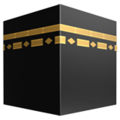
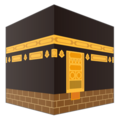
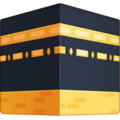
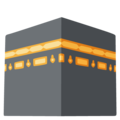
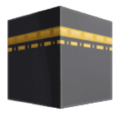
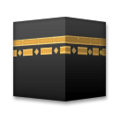
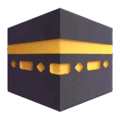
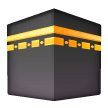
Here, you'll find a variety of emojis showcasing how they appear across different operating systems. Each company designs emojis to reflect their own unique style, meaning the appearance of the same emoji can vary depending on the platform. We've gathered the most popular platforms to give you a glimpse of how these emojis will look on their respective screens.
Keep in mind that depending on the version of the operating system, the emoji images may still look slightly different from what you see here. For your convenience, you can download any of the images by clicking on the symbol next to each one.

🕋 Worldwide Trend
Stay updated with the latest global trends using data from Google Trends. This section provides insights into how frequently emojis are being searched on the web over the past 12 months. Explore the current trends to see which emojis are gaining popularity worldwide.
🕋 Developer Codes
In this section, you'll find the essential codes developers use to integrate and display emojis across various platforms. Whether you're working with HTML, CSS, or other programming environments, these codes will help ensure that the emojis render consistently and correctly in your projects.
- Shortcode:
- :kaaba:
- Software Shortcodes:
-
:kaaba: ( Github, Slack, Discord )
- Hex Code:
-
🕋 - Decimal Code:
-
🕋 - Punycode:
-
xn--7w8h - URL Escape Code:
-
%F0%9F%95%8B - JavaScript & JSON:
-
\ud83d\udd4b - CSS Code:
-
content: '\1F54B';